


The complete guide
A Practical Guide to Choosing Blue Cotton Fabric
Start with the project, not just the color
A fabric can look right in a photo and still be wrong for the job. Checking those details before you buy saves wasted fabric and a half-finished project.
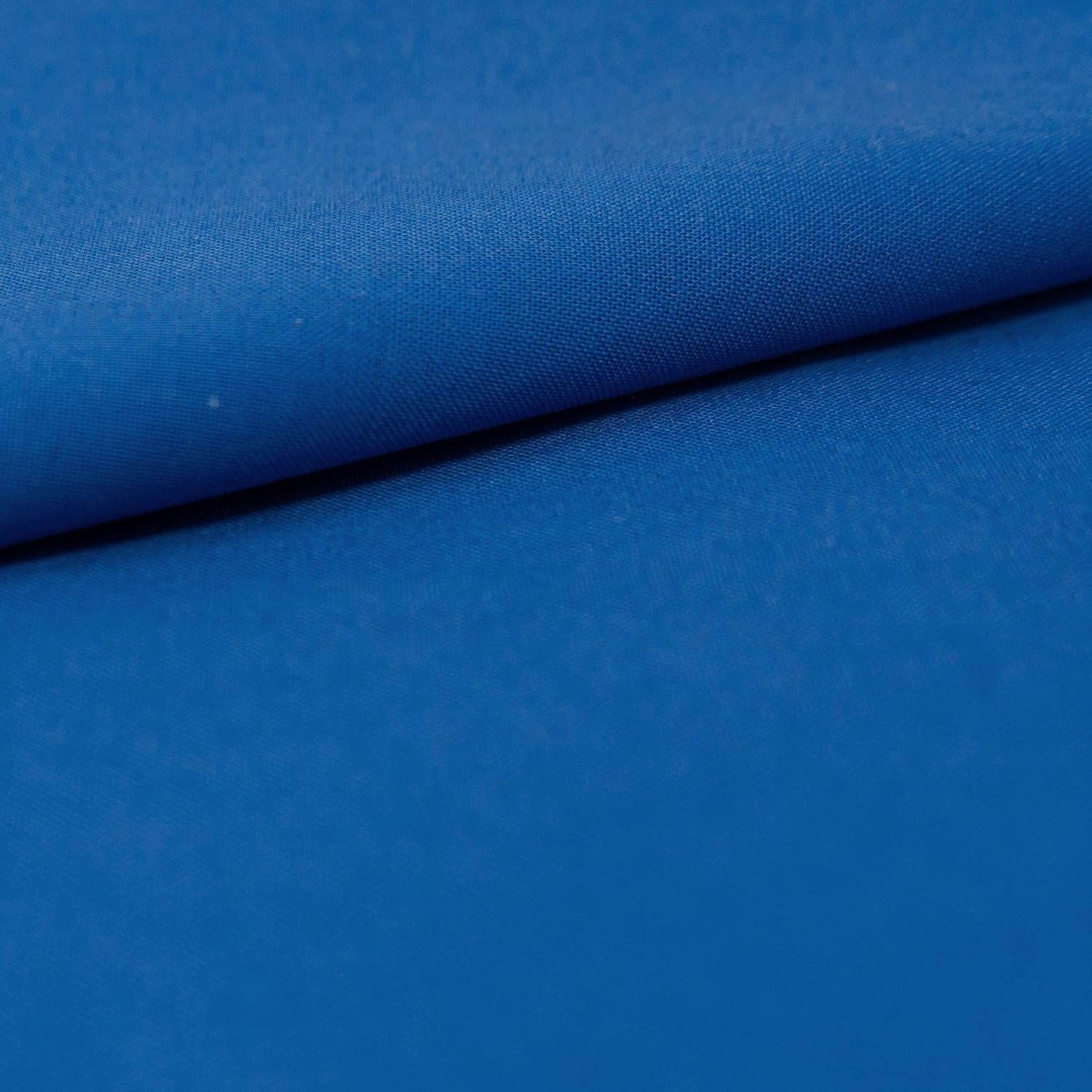
This product gives you one piece of Classic Blue cotton fabric, 1 yard long and 44 inches wide. It is 100% ringspun cotton with a plain weave and a solid pattern. Those are useful starting facts for patchwork, craft work, and some apparel projects.
The next step is to match those facts to what you want to make. Think about the shape of your pattern pieces, how the finished item will be washed, and whether you need any properties that are not stated by the maker.
Understand exactly what one yard means
The supplied piece measures 36 inches along its length and 44 inches across its width. It is one piece, not a custom length chosen to match your project.
That distinction matters when buying cotton fabric by the yard. A pattern calling for 1 yard at a wider fabric width may not fit this piece. Long straps, large panels, or pieces placed on a fold can also affect the layout, even when the total amount of fabric sounds sufficient.
Open your pattern and find the yardage chart. Look for the width closest to 44 inches, then check the amount needed for your chosen size or version. If the pattern requires more than 1 yard, do not expect this single piece to stretch to cover it.
For a self-designed project, draw the pieces on paper first. Include seam allowances, hems, and any extra parts. A rough layout is much more useful than guessing from the finished item's size.
What the cotton and weave tell you
The listed fiber content is 100% ringspun cotton. The weave is plain, so this is a woven fabric rather than a listed knit fabric.
Fiber content and weave help narrow your choices, but they do not tell the whole story. The maker does not give fabric weight per square yard, a drape rating, or an opacity measurement. You cannot use the cotton content alone to decide whether it will suit a flowing blouse or a structured bag.
Use the fabric recommendations on your pattern as the first filter. If it calls for woven cotton, this cotton dressmaking fabric may be worth considering. If it requires a stretch knit or a specific heavy fabric, do not treat this as a direct substitute.
When the piece arrives, check its feel and hang before cutting. That simple pause can help you decide whether your original idea still makes sense.
Using a solid blue in patchwork
Printed fabrics bring detail to a quilt, while a solid can give the eye somewhere to rest. Classic Blue may work as a border, a group of blocks, or a contrast beside prints, depending on your design.
There is no printed motif to position on this solid blue sewing fabric. That removes one layout concern, although grain direction and accurate cutting still matter.
Before cutting all your pieces, place the blue beside the other fabrics in natural light. Look at the combination both close up and from a few steps away. A pairing that looks clear on a table may blend together when viewed across a room.
When choosing cotton fabric for patchwork, compare care needs as well as colors. Test unfamiliar fabrics before joining them, especially when a dark solid sits beside a light background. No colorfastness result is supplied for this piece.
Choosing a small sewing project
A one-yard piece encourages a focused plan. Small pouches, patchwork units, and simple fabric crafts are possible starting ideas, provided their cutting layouts fit.
Choose the pattern before deciding that the quantity is enough. A pouch with a separate lining may need another fabric. A design with several pockets can use more material than its finished size suggests. Even small items can have surprisingly large cutting lists.
For beginners, a project with a few straight seams gives you a chance to learn how the material feeds through your machine. Try the stitch settings on an offcut first. Check the seam for puckering and adjust before sewing the main pieces.
Keep early projects simple enough that you can focus on careful measuring and pressing. The value of a practice project is in learning how the fabric behaves, not just producing a finished item quickly.
Check apparel patterns with care
Apparel is a listed use, but that does not make this fabric suitable for every garment. A close-fitting pattern may need stretch. A flowing style may depend on a drape that is not confirmed by the maker.
Read the pattern's suggested fabrics and look for woven cotton among them. Then check the yardage for your size. Some garment components may fit within a yard, while a full garment may need more.
Coverage matters too. Opacity is not specified, so inspect the fabric under the light in which the garment will be worn. If you plan to add a lining, include its cost, care needs, and construction steps in your decision.
There is one clear restriction. This fabric is not intended for children's sleepwear. Do not use a general apparel description to set that restriction aside.
Prepare before the first cut
First, inspect the piece while it is still unwashed and uncut. Check that the color, quantity, and condition match what you expected. Keep the original packaging until you have decided to keep it.
If the finished project will be washed, preparing the fabric before cutting is a sensible way to reduce surprises later. No shrinkage percentage is given, so leave some room in your layout rather than assuming every inch will remain available.
Follow the stated care instructions. Machine wash gently in cold water with like colors, then tumble dry on low heat. Use a warm iron to prepare the fabric for measuring.
Once it is dry and pressed, measure again. Work from the fabric you now have, not only from the original listed dimensions. This is especially important when your cutting layout is a close fit.
Plan your seams and finishing
Before cutting the main fabric, check the pattern instructions from beginning to end.
Arrange everything before making the first cut. Leaving a narrow strip at one end may seem harmless until you discover that a longer piece was meant to go there. With cotton fabric for small projects, thoughtful placement can make the difference between enough fabric and a shortfall.
Use an offcut to test your needle, thread, and stitch settings. There is no universal machine setting supplied for this product, so use your machine guide and judge the sample seam.
Plan a suitable seam finish for the item you are making. Consider how often it will be washed and which edges will remain exposed. Follow the pattern's construction advice rather than assuming one finish suits every project.
Care for the finished item
The fabric's care directions are gentle cold machine washing with like colors, nonchlorine bleach when needed, low tumble drying, and a warm iron.
A finished item may include other materials with different needs. Linings, trims, thread, and fasteners can change the care routine. Choose compatible supplies from the start so the finished piece is practical to maintain.
Keep a small labeled offcut if you have room. It gives you a place to test a pressing method or care treatment without risking the finished item. It also helps you identify the fabric when planning a later repair.
Store leftovers clean and dry, away from strong sunlight. Sort pieces by usable size so you can see what remains without unfolding every scrap.
Delivery and returns before you commit
A delivery lead time is not specified by the maker. If you are sewing for a deadline, check the delivery information for your address before ordering. Leave time for inspection, preparation, and sewing rather than planning around arrival alone.
Change-of-mind returns are available within 14 days of delivery. The fabric must be unwashed, uncut, unused, and in its original packaging, and the customer pays return postage.
That makes the first inspection important. Decide whether the fabric suits your project before washing or cutting it. Faulty or wrongly described goods are put right free of charge, so contact us if something is wrong with the supplied piece.
The short version
Choose this piece when your plan calls for solid blue, 100% ringspun cotton and fits within a 36-inch length and 44-inch width. It offers a straightforward option for suitable patchwork, craft, and apparel patterns.
Check the layout, inspect the fabric, and prepare it according to the care directions before cutting. A little planning helps turn a single yard into a project you can finish and use.