
The complete guide
A Practical Guide to Choosing White Nylon Spandex Fabric
When your sewing project needs room to move
A fitted garment asks more from fabric than a loose design does. It needs to follow the body without making every movement feel restricted. Picking a fabric by color alone can leave you with the wrong stretch, too little coverage, or a piece that does not fit your pattern layout.
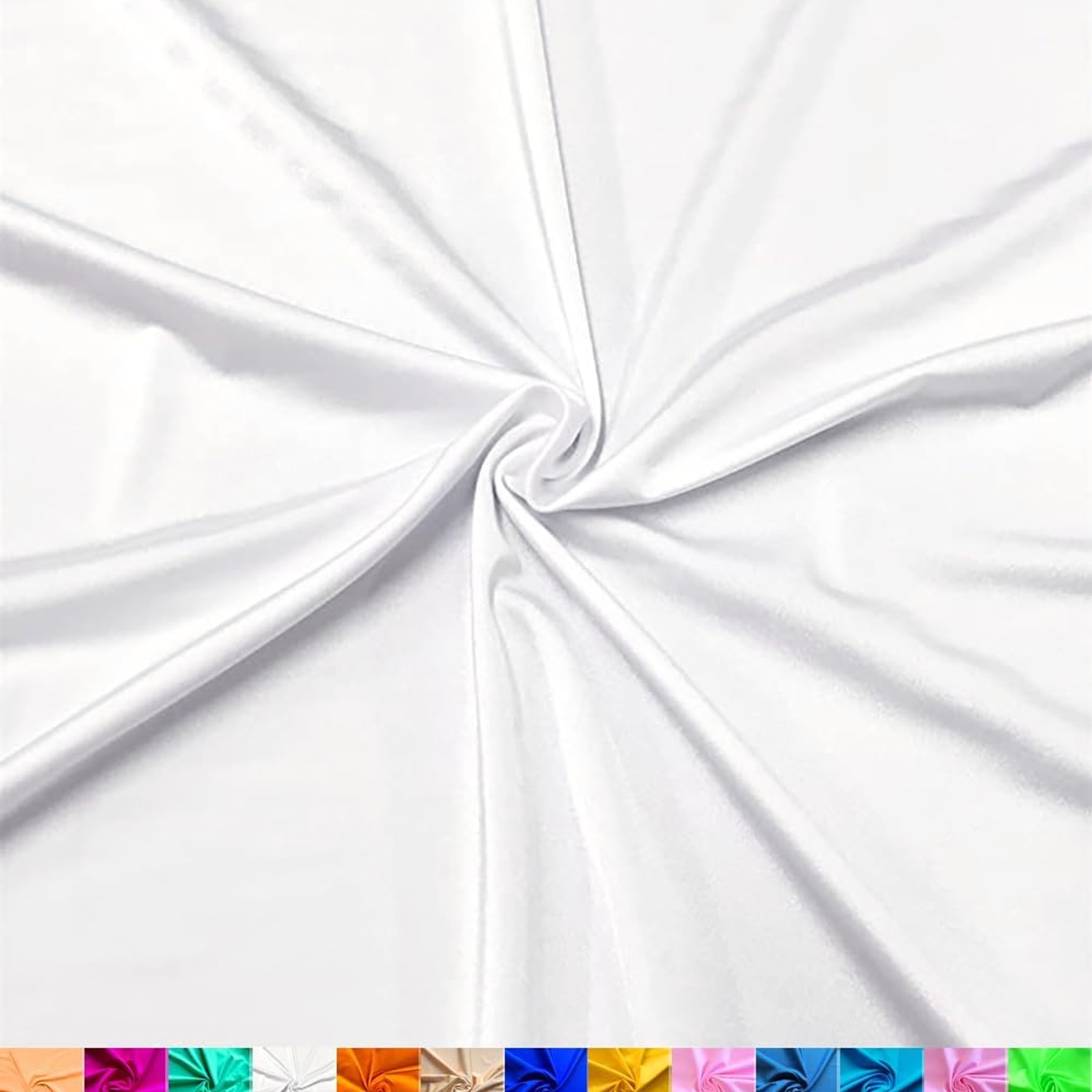
This white nylon spandex fabric is listed for swimwear and activewear. It comes as one piece measuring 1 yard long and contains 80% nylon and 20% spandex. The solid white color gives you a plain starting point, while the four-way stretch is useful for designs that call for flexibility.
The most important planning detail is also the main unknown. The maker does not state the width. Before you decide that one yard is enough, check both your pattern requirements and the available width with the store.
What the blend tells you
The composition gives you a useful first check when choosing fabric. This is a nylon spandex blend, with nylon making up 80% and spandex making up 20%. The product information describes stretch, comfort, durability, and shape retention as features of the material.
Those descriptions do not replace measured performance details. The maker does not state a stretch percentage, recovery test result, or fabric weight per unit area. You cannot work out those values from the fiber percentages alone.
If your pattern calls for a specific blend, compare it with the stated composition. If it calls for a measured amount of stretch, you will need to check that separately. A fabric can have the right fiber names and still behave differently from the fabric a pattern designer used.
How four-way stretch affects your choice
Four way stretch fabric stretches along its length and across its width. That makes direction part of the planning process, especially when a garment is designed to fit close to the body.
Do not assume that both directions stretch by exactly the same amount. The maker does not provide a measured figure for either direction. Follow the stretch direction shown on your pattern, and check the material before laying out your pieces.
Once you have decided to keep the fabric, a small test can help you judge its behavior. Compare the stretch with the pattern's instructions and see how it returns after gentle stretching. This is more useful than choosing by the word “stretch” alone.
Choosing it for swimwear
This product is described as stretch swimwear fabric, so it belongs on the shortlist for a pattern that calls for this kind of material. It is not, however, a promise that every swimsuit design will work with it.
Start with the pattern's fabric notes. Look for the required stretch, suggested lining, and layout width. A design may depend on elastic or lining for its finished fit, so do not assume the outer fabric will do every job on its own.
Coverage needs special thought with white swimsuit sewing fabric. The maker does not state whether this material is opaque when stretched or wet. Check those points before relying on it for an unlined garment. There is also no stated chlorine resistance or sun protection rating.
Choosing it for activewear and fitted designs
Activewear fabric needs vary with the garment. A fitted top and a pair of close-fitting bottoms may ask for different coverage and support, even when both patterns call for stretch.
This fabric is listed for activewear, but there is no stated compression level, moisture-management rating, or support rating. Choose it against your actual pattern requirements rather than treating “activewear” as a single standard.
The same approach helps with other fitted sewing projects. Check whether the pattern needs a particular weight or drape. Those details are not fully described here. If the finished look depends on them, ask for more information before buying.
Work out whether one yard is enough
The supplied length is clear. You receive one piece measuring 1 yard, or 36 inches, long.
Pattern yardage usually depends on fabric width. A layout designed for a wider fabric may not fit onto a narrower piece, even when the length is the same. Read the yardage table for your chosen size rather than using another size as a guide.
Include all the pattern pieces in your plan. Small bands, facings, and other parts can take up space that looks spare at first. Leave room for any testing you intend to do as well.
If you need several yards in one continuous length, ask before ordering. This product supplies a one-yard piece. Buying several items should not be treated as a guarantee of a single longer piece.
Think about solid white as part of the design
Solid white fabric leaves the garment's lines and seam placement easy to see. That can be useful when you want a plain finish, but it also makes careful planning worthwhile.
Consider what will sit beneath the finished garment. The maker does not promise full coverage, and stretching a fabric can change how it looks. Lining choices should follow your pattern and your own coverage needs.
Thread, elastic, and lining can also affect the final appearance. If a close color match matters, compare those materials together before sewing. Product photos are useful for an overview, but the actual fabric is what you need for that final judgment.
Check the piece before preparing it
When the fabric arrives, inspect it before washing or cutting.
Measure the width at this stage and compare it with your planned layout. Keep the packaging while you make that decision. This gives you time to assess whether the piece suits your project without changing its condition.
The return terms matter here. Change-of-mind returns require fabric to be unwashed, uncut, unused, and in its original packaging. Washing first may feel like the natural start to a sewing project, but it should come after your decision to keep it.
Set up a small sewing test
Sewing with stretch fabric is easier to plan when you test before making the main seams. The maker does not specify a needle type, needle size, or machine setting for this product.
Use the advice supplied with your sewing machine and pattern as your starting point. Once you have committed to keeping the fabric, test on a small offcut. Check the seam both at rest and under the amount of stretch the garment will need.
Look for skipped stitches, puckering, or a seam that cannot move with the fabric. Adjust your setup before continuing. A short test costs less fabric and effort than unpicking a long finished seam.
Take care during cutting, too. Follow the pattern's layout and avoid stretching the material out of shape while positioning it. Accuracy at this stage helps the pieces match as intended.
Keep washing gentle
The stated stretch fabric care is straightforward. Hand wash in cold water with mild detergent, or use a gentle machine cycle. Avoid bleach and fabric softeners.
For drying, the guidance allows air drying or a low-heat dryer setting. High heat is not part of the stated care advice. If your finished garment includes elastic, lining, or other components, check their care needs as well.
Store the fabric folded rather than leaving it under tension. Keep it away from rough surfaces that could damage it. These are simple habits, but they are worth building into your routine for stretch sewing materials.
Check delivery and return details before ordering
A delivery lead time is not provided by the maker. If you are sewing for a trip, class, or event, check the delivery estimate for your destination before placing the order. Leave yourself time to inspect the piece and make any needed changes to your plan.
Returns are accepted within 14 days of delivery for fabric that is unwashed, uncut, unused, and in its original packaging. The customer pays return postage for a change-of-mind return.
Faulty or wrongly described goods are put right free of charge. If something looks wrong, contact us before washing or cutting so the issue can be assessed in its original condition.
The short version
This is a one-yard piece of solid white tricot made from 80% nylon and 20% spandex. It has four-way stretch and is listed for swimwear and activewear.
Choose it by matching the fabric to your pattern, not by the project label alone. Inspect it before washing or cutting, then use gentle care and a small sewing test to get your project off to a considered start.