
The complete guide
Choosing and Using a Cotton Fat Quarter Bundle
Small sewing projects often need variety without a large amount of any one print. Buying a separate length for every detail can leave you with more fabric than your pattern needs. A fat quarter bundle offers a different starting point, with several designs in pieces you can plan around.
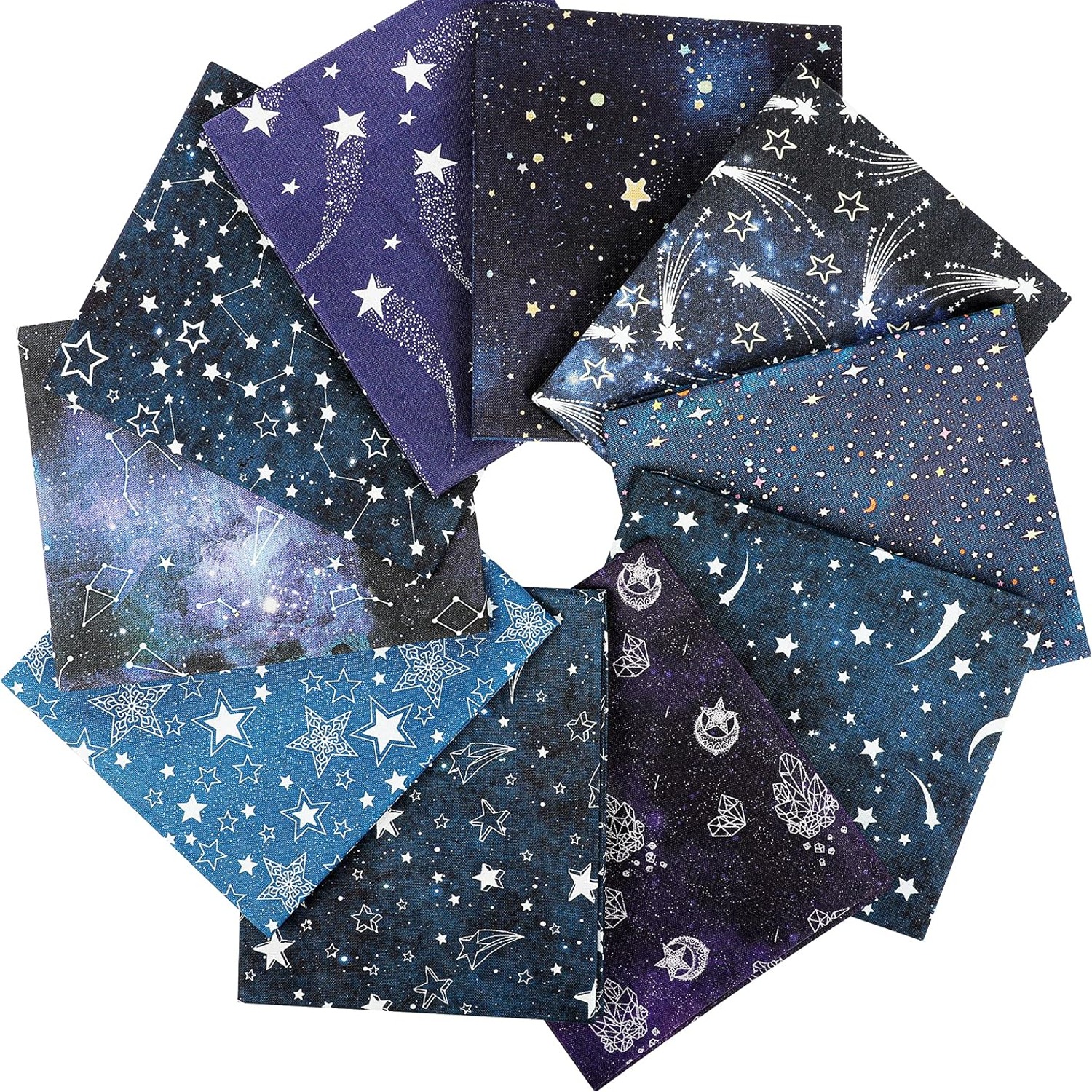
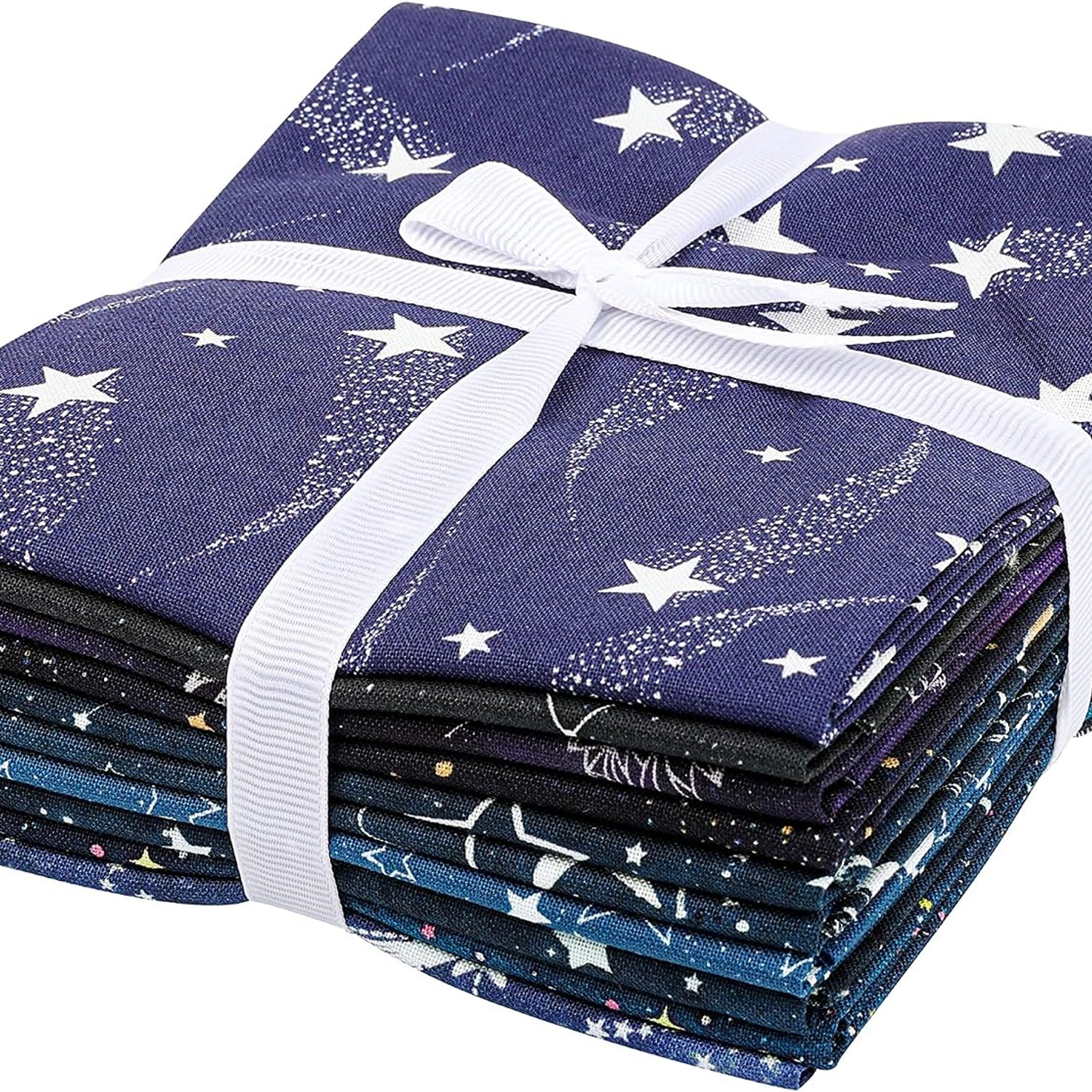
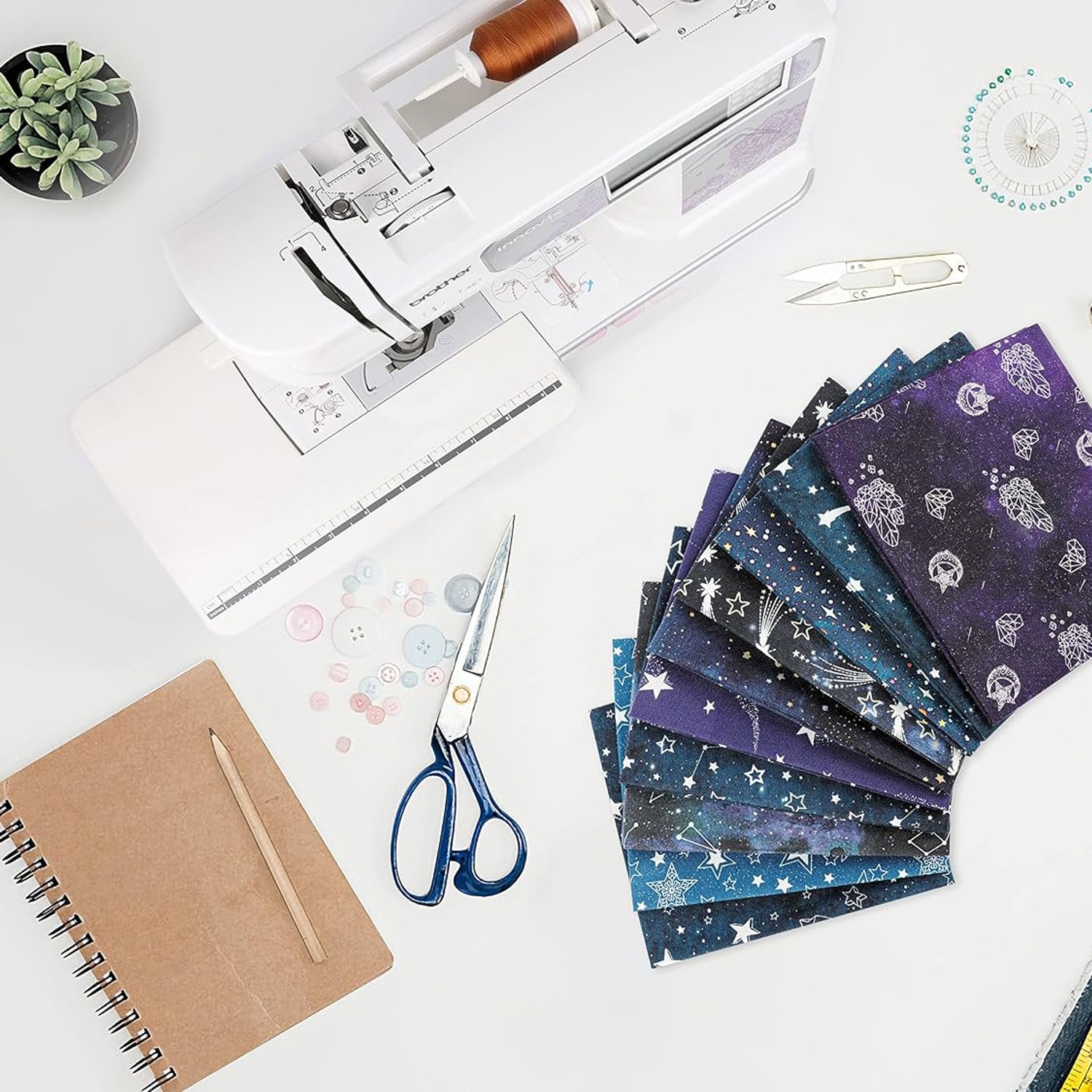
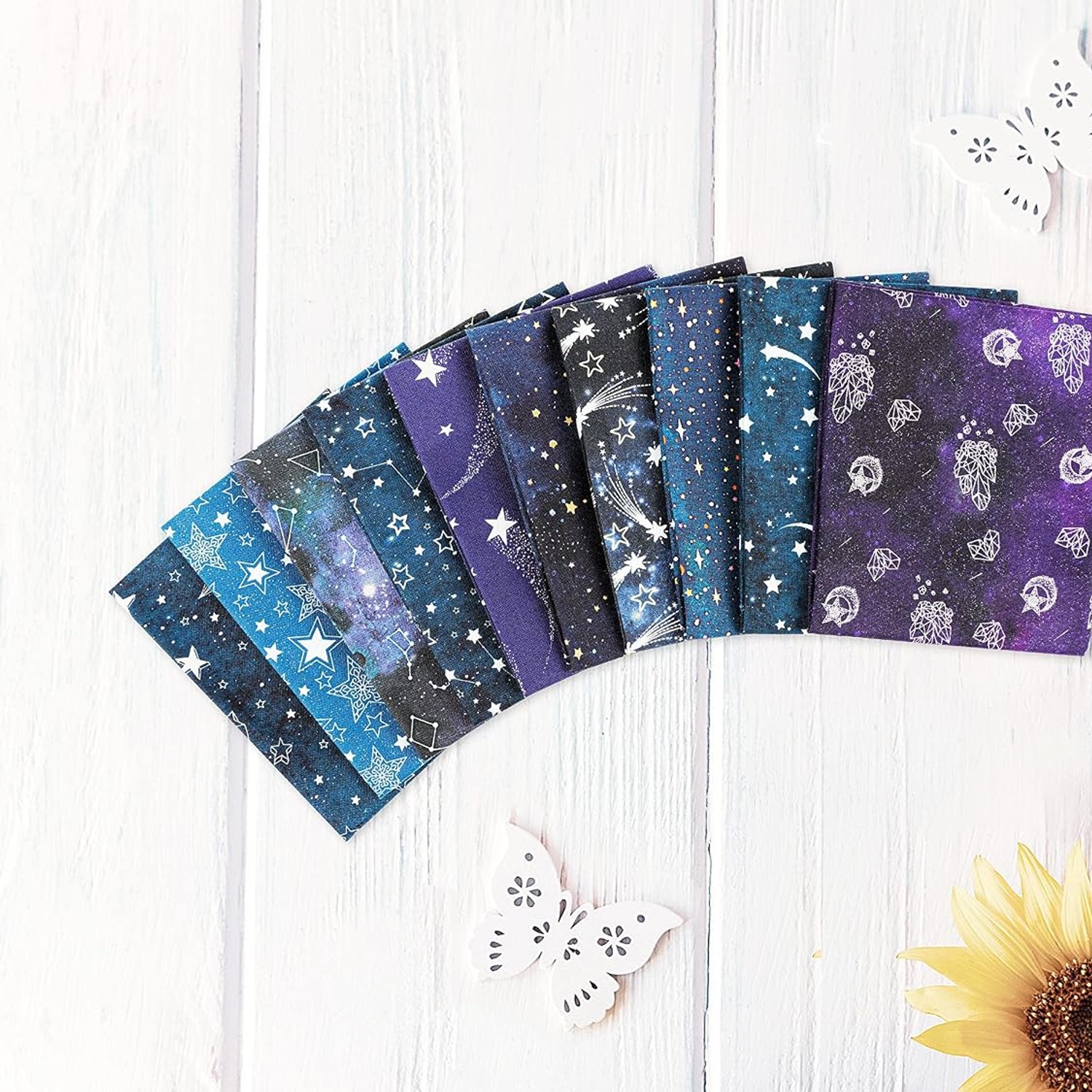
This Starry Sky assortment contains ten printed cotton pieces, each measuring 18 x 21 in (46 x 53 cm). It gives you a set of prints to compare on your worktable before you commit to a layout. The main question is whether those cuts fit the project you have in mind.
What you get in this bundle
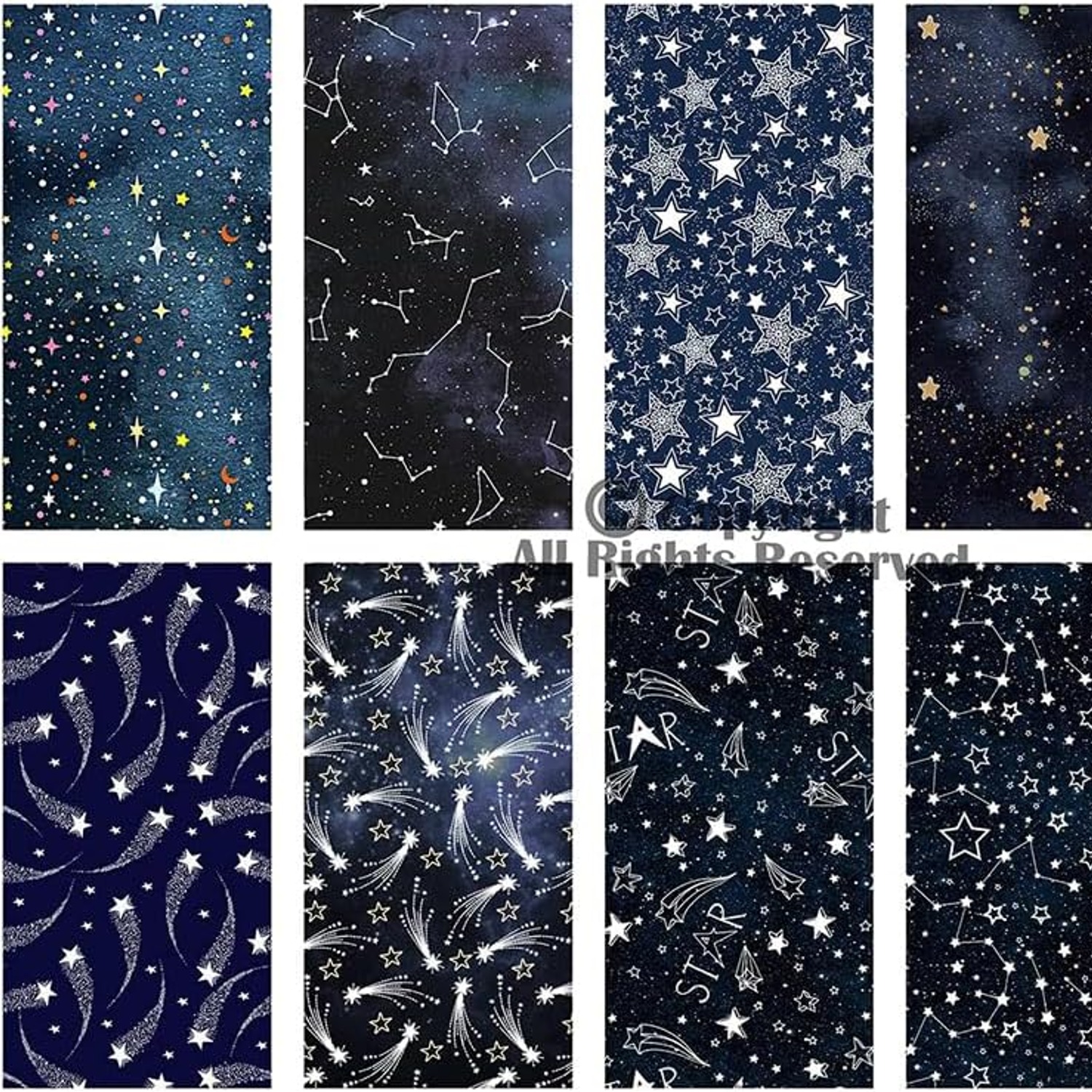
The pack includes ten designs, with one fat quarter of each. The fabric is cotton, the weave is plain, and the collection is called Starry Sky.
That distinction matters when you are following a pattern. Ten separate rectangles cannot replace a continuous length in every project, even if the total amount of fabric seems similar. A large back panel or long unbroken strip may need a separate fabric purchase.
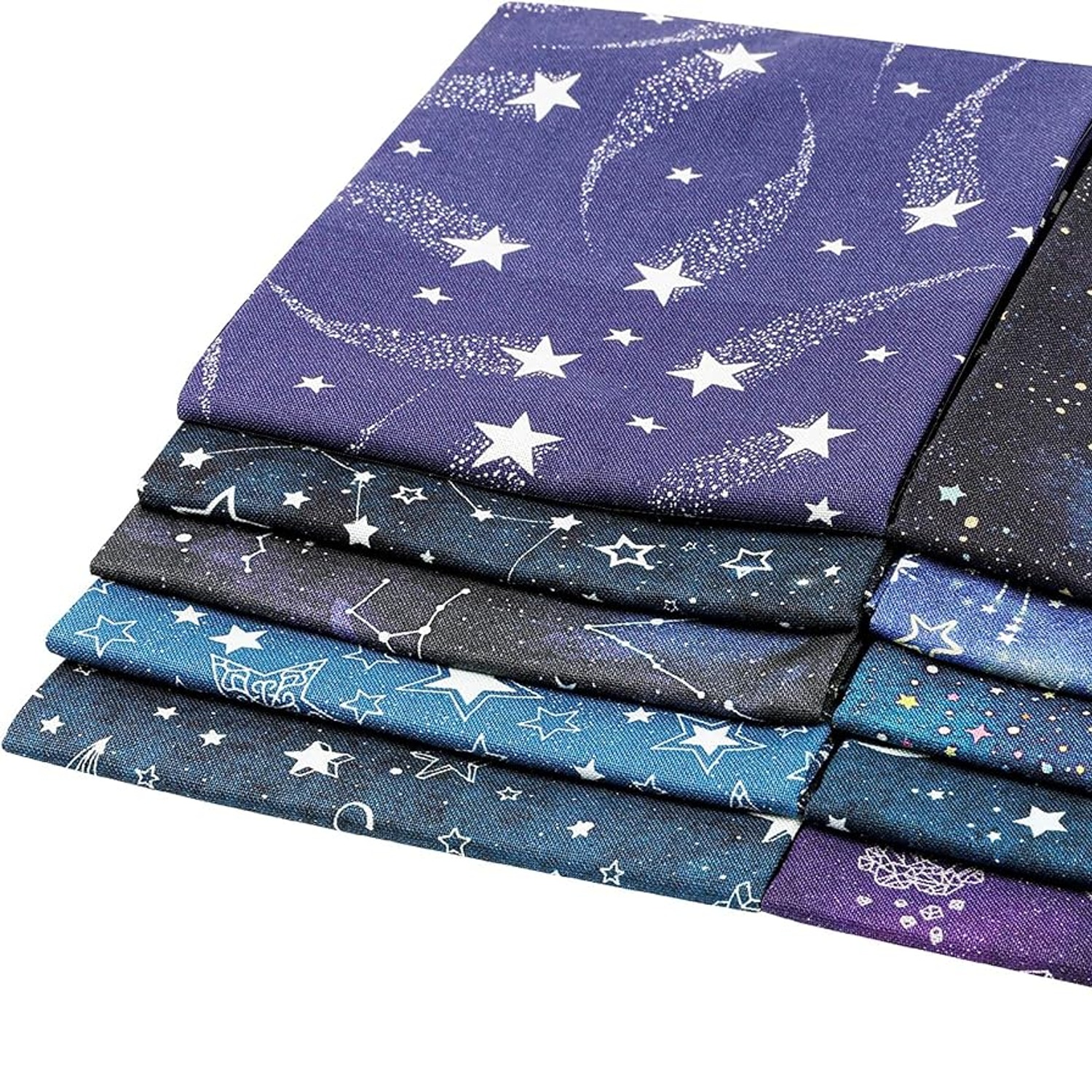
Look closely at the product images before choosing. A collection name gives you a theme, but it does not tell you every color, motif, or print scale. Think about how the designs will look when cut into the shapes your pattern uses.
How fat quarters work in a cutting plan
A fat quarter gives you a rectangle to divide into smaller pieces. For this bundle, use the stated 18 x 21 in measurements rather than relying on a general idea of fat quarter sizing.
Start with your pattern's largest required cut. Check whether it fits inside one piece, then consider where the remaining shapes can go. Include seam allowances if they are not already built into the cutting measurements.
Leave room for squaring the fabric edges and any size change after washing. A cutting layout that uses every fraction of an inch may leave little room for adjustment. Sketching the cuts on paper first can help you spot a problem before scissors touch fabric.
Print direction matters too. If you want a motif to face a certain way, you may not be able to turn a pattern piece sideways to make it fit. Check the actual fabric before settling on your layout.
Who this assortment may suit
A quilting fabric assortment can suit a maker who wants several prints for blocks, borders within a pieced design, or smaller details. It also gives someone working on short sewing projects a choice of fabric without starting with a large continuous cut.
For a beginner, the useful part is the clear piece count and size. You can choose a pattern that specifically calls for fat quarters, then compare its requirements with this pack. A simple project with a generous cutting layout is easier to plan than one that depends on exact edge-to-edge use.
More experienced sewists may prefer to start with the prints and build a layout around them. Either approach works as a planning method. What matters is checking quantities rather than assuming that one bundle will cover every part of a project.
Choosing a quilt or patchwork project
If you are buying fabric for quilt blocks, read the full pattern requirements first. Check how many fat quarters it needs, whether prints repeat, and whether background fabric is listed separately.
A bundle can supply the printed parts of a quilt without supplying everything needed to finish it. Backing, batting, borders, and binding may all need separate planning. Do not judge the finished quilt size from the number of prints alone.
Lay the pieces out before cutting and look at the balance between them. Try placing different prints next to each other, then step back. If two designs seem hard to tell apart at a distance, you may want to separate them in the layout.
There is no need to use all ten designs in one project. You might choose a smaller selection for a panel and keep the rest for another piece. Let the pattern and the look you want guide the choice.
Small sewing projects beyond quilts
Fat quarter sewing projects can include small bags, pieced panels, and fabric details. The supplied rectangles set the limit for an unpieced section, so check the largest pattern piece before choosing a design.
For a bag, cotton may be only one part of the material list. Your pattern could call for lining, interfacing, handles, or a closure. This bundle is a fabric assortment, not a kit with those items included.
Patchwork cushion fabric is another possible use. You can join smaller cuts to build a front panel, then plan the back separately. Measure the intended cover size and include the seam and closure requirements before deciding how many pieces to use.
For smaller crafts, keep an eye on the size of the printed details.
Applique and binding need different checks
When choosing fabric for applique, compare your template with the print. Decide whether you want a recognizable motif inside the shape or a more mixed appearance. Place the template over the fabric before cutting to see what will remain visible.
Allow for the applique method your pattern uses. Turned edges and raw-edge methods have different cutting needs, so follow the pattern rather than guessing from the finished shape.
For quilt binding fabric, calculate the total strip length required. These are separate 18 x 21 in pieces, so a longer binding will need joins. Check strip width, joining allowances, and print direction before cutting up a piece you might need elsewhere.
What the material details do and do not tell you
The product details list cotton and a plain weave. Those facts help identify the fabric type, but they do not answer every project question.
A fabric weight per square yard is not specified. The listed item weight is 5.2 ounces, which should not be treated as a measure of the fabric's thickness or weight per area. Exact shrinkage, country of origin, and certifications are also not specified.
If your pattern depends on a particular fabric weight, finish, or standard, confirm that need before ordering. A broad label such as cotton does not make every cotton fabric interchangeable.
For projects with special safety requirements, use materials with the required documentation. Do not assume a certification from the fabric's intended use or appearance.
Washing and pressing before sewing
Machine washing is listed for this printed cotton fabric, but a wash temperature and drying method are not stated. Follow any directions supplied with the order.
Inspect the fabric before washing it. Check the piece count and look over the prints while the bundle is still unused. If you are considering a return, washing or cutting will affect eligibility.
If you decide to prewash, test a small piece first and allow for possible shrinkage in your cutting plan. A test can help you choose a care method, but it does not establish a guaranteed result for every future wash.
Use the same cautious approach to pressing. Follow any supplied guidance and test before applying heat across the full piece. Once prepared, flatten the fabric enough to measure accurately rather than cutting around folded creases.
Keeping useful leftovers
Before making the first cut, decide which remaining sections could serve another purpose. A larger leftover rectangle may be more useful than several narrow scraps.
Keep offcuts together by project or print so you can find them later. Small pieces may suit applique, patchwork details, or a practice seam, depending on their size.
Store unused cotton craft fabric in a clean, dry place away from direct sunlight. Keep any care information with it, especially if you expect to use the remaining pieces months later.
Buying for someone else
A sewing fabric bundle can be a thoughtful gift when you know the recipient's taste. Look for a match with the prints they enjoy, not just the type of craft they do.
This assortment may suit someone who uses printed fat quarters for patchwork or smaller projects. It is less easy to choose for a person following a fixed pattern that requires specific colors or continuous yardage.
If you are unsure, share the images and piece dimensions before buying. That gives the recipient a chance to check whether the Starry Sky collection fits an upcoming project.
Delivery, inspection, and returns
A delivery lead time is not specified by the maker. Check the delivery details for your destination, particularly if the fabric is needed for a class or gift.
On arrival, inspect the bundle before cutting, washing, or using it. Keep the original packaging until you are sure you want to keep the fabric.
Returns are available within 14 days of delivery for fabric that is unwashed, uncut, unused, and in its original packaging. The customer pays return postage. Faulty or wrongly described goods are put right free of charge.
The short version
Choose this patchwork fabric bundle if your plan calls for ten printed cotton fat quarters in a Starry Sky theme. Each piece measures 18 x 21 in (46 x 53 cm), and the fabric has a plain weave.
Check your cutting list, allow for preparation and seams, and plan any extra materials separately. A few minutes spent on those checks will help you decide whether this assortment is the right starting point for your next sewing project.