
The complete guide
A Practical Guide to Choosing and Using White Tulle
When a decoration needs a softer finish
A bare table or plain backdrop can look unfinished even when the rest of an event is ready. Fabric can help, but choosing the right amount and type takes a little thought. You need to know how it will fall, how much space it will cover, and whether the finish suits your plan.
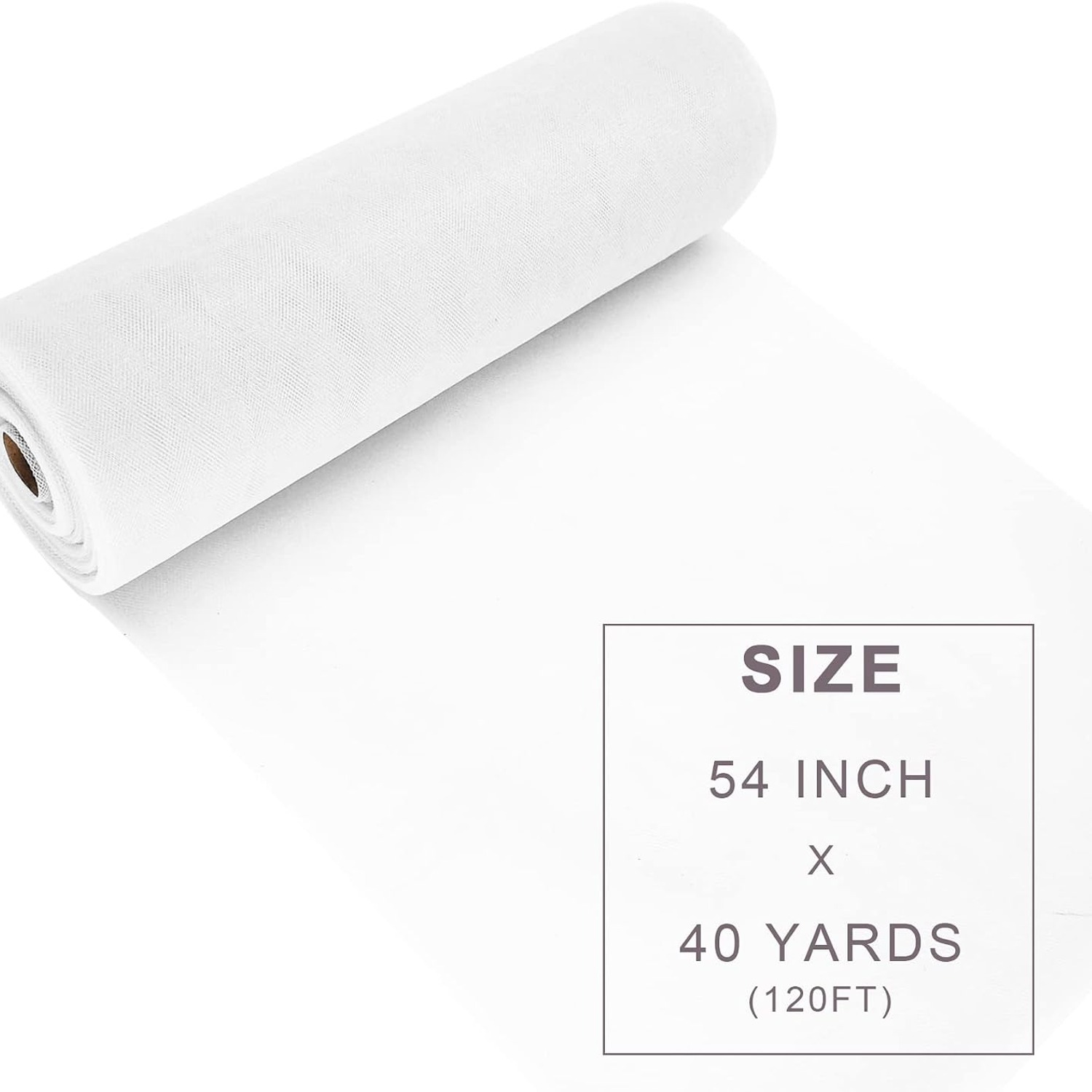
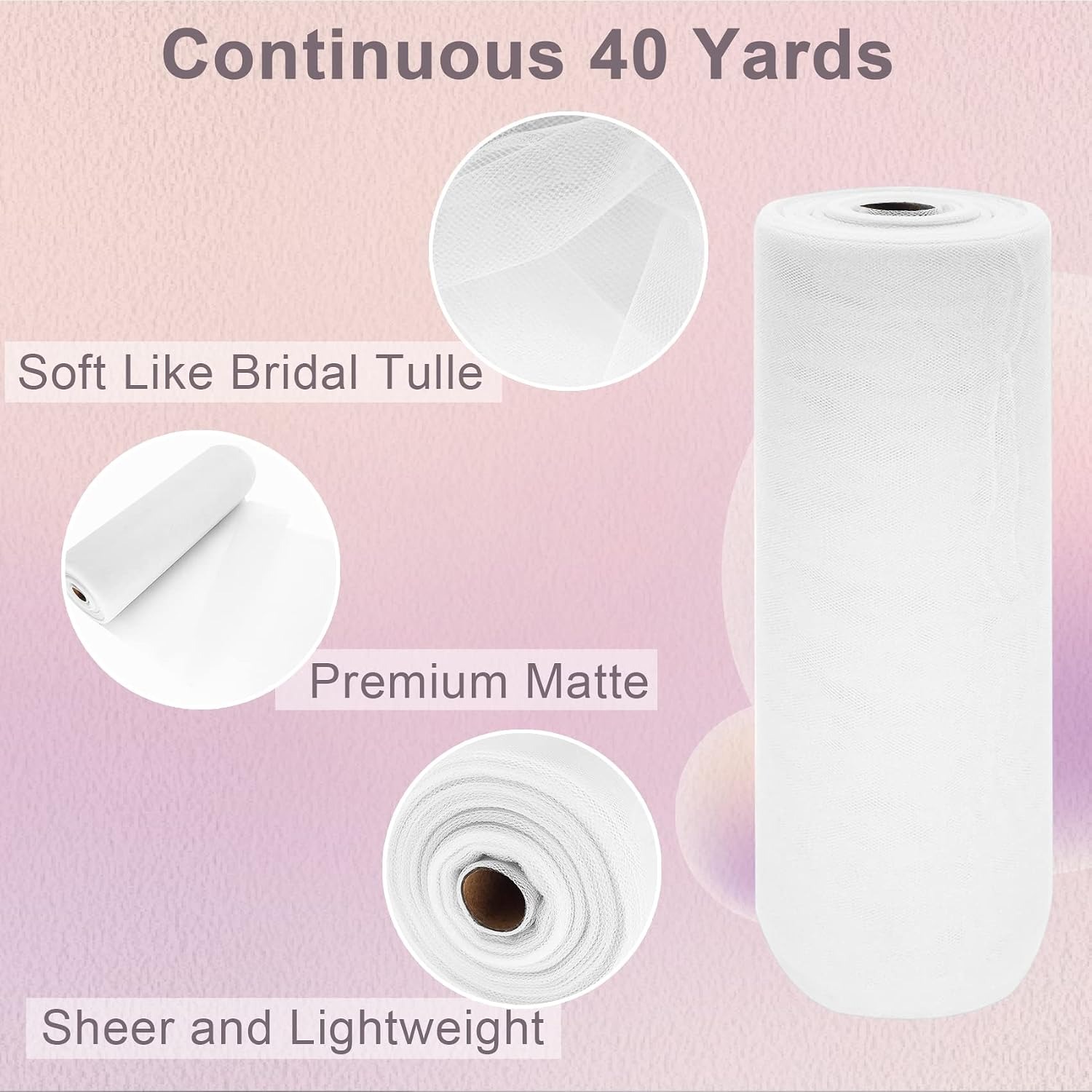
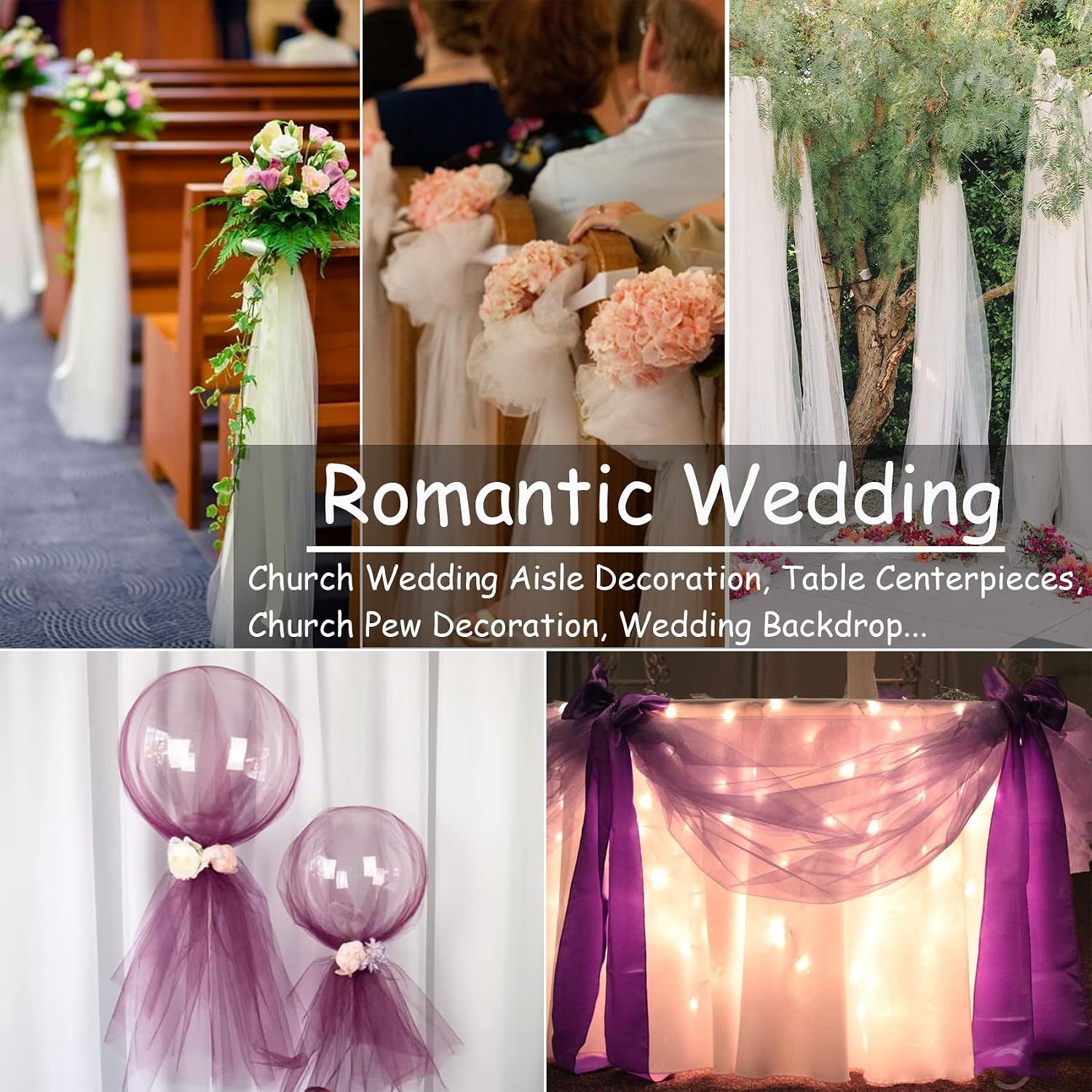
This tulle fabric roll gives you one continuous length of white fabric, 54 inches wide and 40 yards long. It is described as soft and draping, with uses that include wedding decor, party decorations, table runners, and tutu skirts.
The useful starting point is the size. Rather than buying small pieces for each detail, you can map out several projects from a full roll. Measure first, then decide where the fabric will have the most effect.
What you are buying
The pack contains one roll, also described as a bolt of fabric. Its 40-yard length is the same as 120 feet. The width is 54 inches.
This is not a custom-cut fabric service. You receive the full roll and cut your own pieces to suit your design. That makes planning important, especially when you need a mix of long lengths and shorter strips.
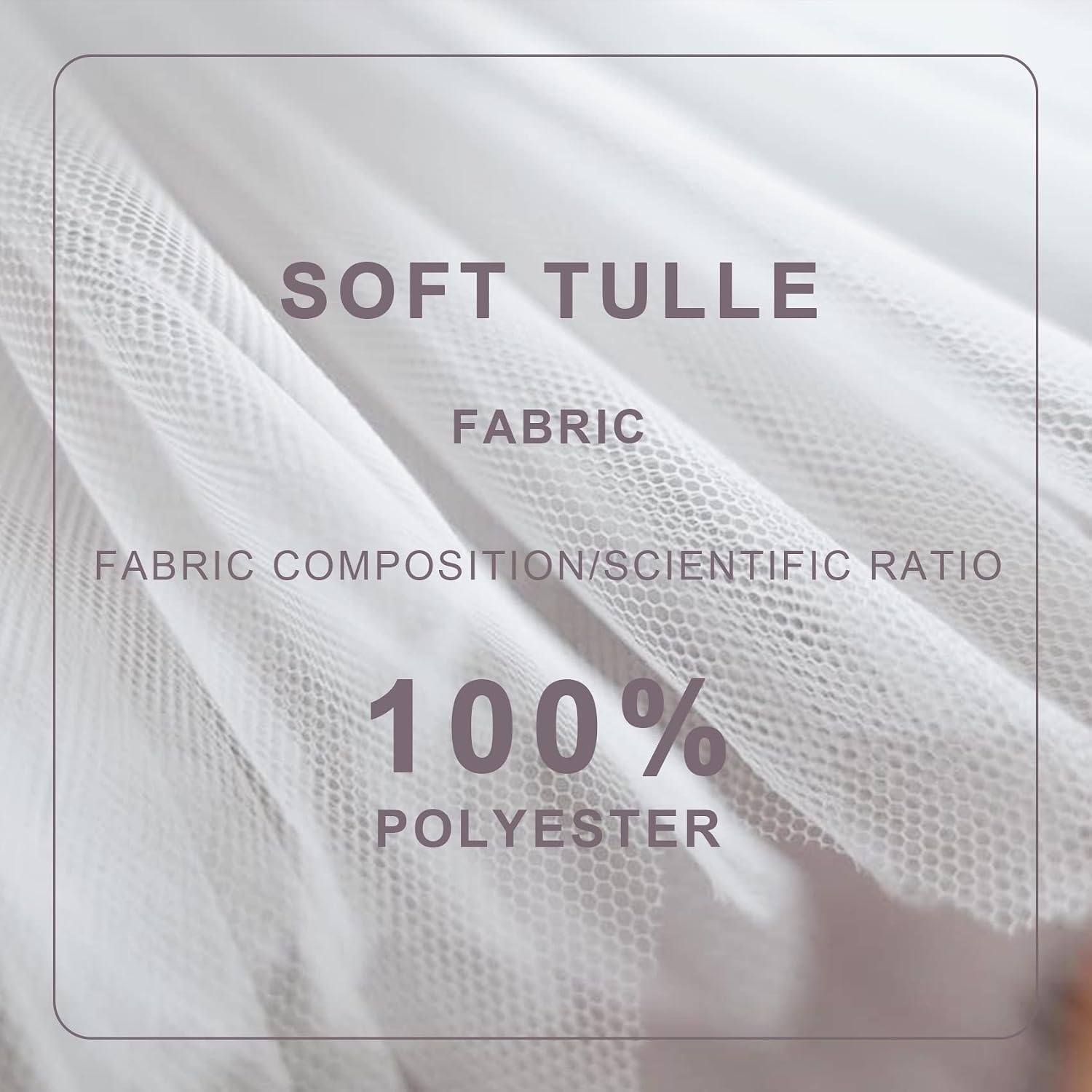
The listed color is white, and the pattern is solid. Tulle is the fabric type, while leno is the listed weave. The exact fiber composition is not specified. If a sewing pattern or venue requires a particular fiber, confirm that detail before ordering rather than guessing from the word tulle.
How tulle works in a design
Tulle is a mesh fabric. Its open structure gives a different effect from a solid sheet of cloth, so the background becomes part of the finished look.
A single layer may look quite different from several layers gathered together. The maker does not give an opacity rating, so use a test section to judge the result. Try it against the actual table covering, wall, or frame you plan to use.
Soft draping tulle is suited to loose folds and gathered shapes. It is not described here with a measured stiffness rating. If your design needs a firm shape that stands on its own, do not assume this fabric will provide it.
A quick trial can save a lot of cutting. Arrange a short section, step back, and check the shape from the distance your guests will see it.
Who this roll suits
This format is worth considering when you have several related decorations to make. A full white tulle bolt lets you carry the same material through a table display, a gift area, and other small details.
It may also suit a crafter who wants tulle fabric for crafts across more than one session. Keeping the unused length together on the roll makes it easier to see what remains.
For a very small project, 40 yards may be more than you need. Work out the likely use before choosing a full bolt. Extra fabric is only useful if you have somewhere to store it and a reason to use it later.
Choosing white for your event
White can be easy to plan around, but two white fabrics do not always look identical together. The maker does not give an exact shade reference.
If your project pairs this fabric with white linens, ribbons, or clothing, compare them in the same light before cutting. Indoor lighting and daylight can change how the combination looks.
For white wedding tulle, think about the background as well as the fabric itself. A darker surface may make the mesh more visible, while a pale surface can give a quieter effect.
You do not need to cover every surface. A few planned areas can make the fabric feel intentional without using the whole roll at once.
Measuring before you cut
Start with the finished space, not the length of the roll. Measure the table, frame, or other area where the fabric will go.
Next, decide how the fabric should sit. A flat length needs less material than one with deep folds. Ties, hanging ends, and gathered sections all need their own allowance.
Write down each piece you need and its intended width. Then arrange those pieces within the available 54-inch fabric width. This helps you spot where a narrow strip might fit beside another planned piece.
Keep a cutting description as you work. Once several similar pieces are on a table, it can be easy to lose track of which one belongs where. Simple labels can prevent a short piece from being used in the wrong place.
Using tulle for table runners
Tulle for table runners is one of the listed uses. Before cutting, decide whether you want a broad drape, a narrow gathered line, or a layered arrangement.
Measure the tabletop and add the hanging length you want at each end. If you plan to bunch the fabric along the center, allow more than the straight table measurement.
Test the arrangement with place settings in position. Fabric that looks good on an empty table may take up space needed for plates, serving dishes, or signs.
Keep loose material clear of candles and other heat sources. No flame-resistance rating is provided, so a decorative plan should never depend on the fabric being heat resistant.
Planning backdrops and party details
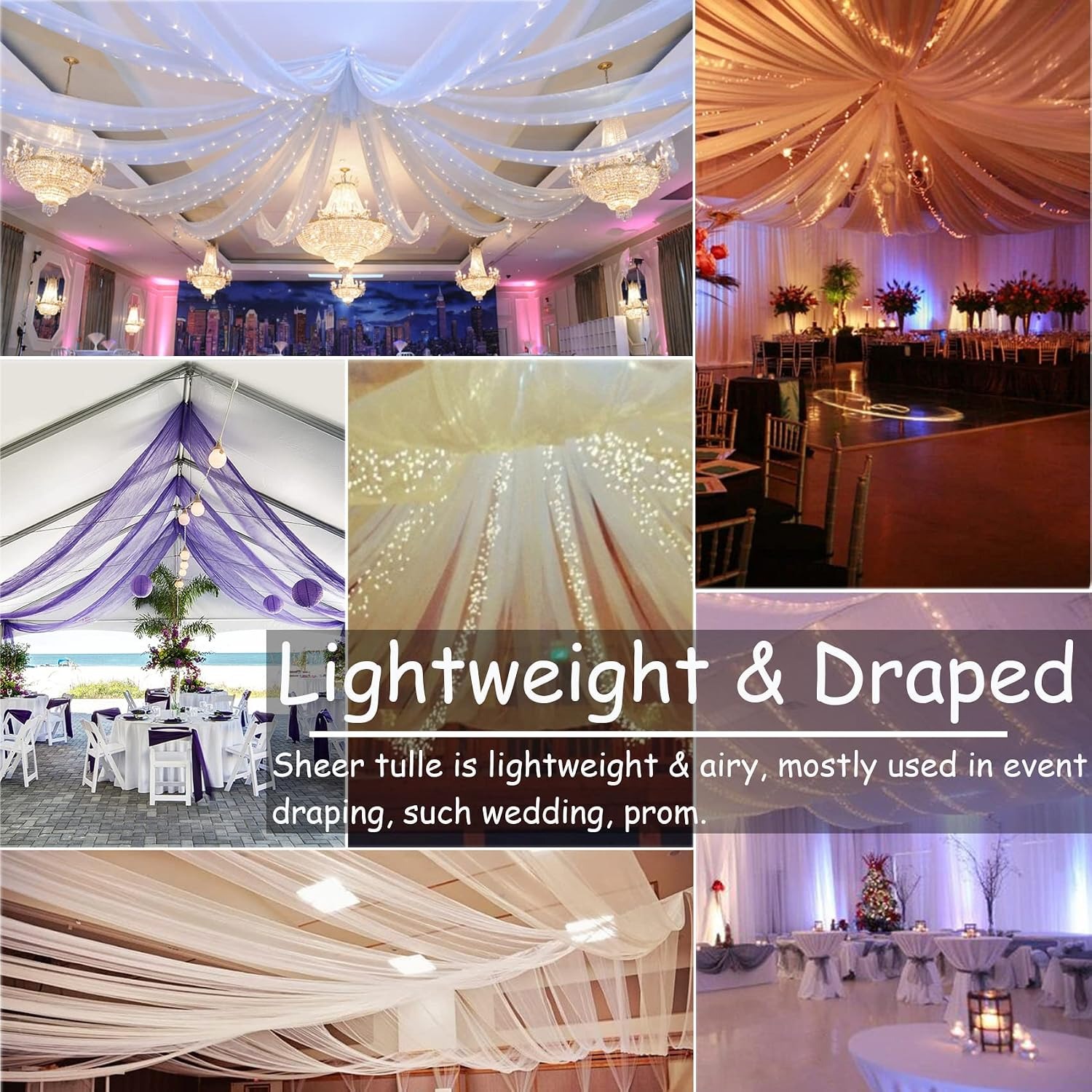
Tulle party decorations can range from small gathered accents to broad fabric panels. For a backdrop, first check the size and strength of the frame you intend to use.
The roll does not list hanging hardware as an included item. Choose supports separately, and make sure the fabric cannot pull them out of place.
For tulle backdrop fabric, test the view through the mesh before deciding on layers. More layers will use more length, which can change how much remains for other decorations.
Check venue rules before making a large display. The maker does not provide safety certification or a load rating, and decorative mesh should not be treated as structural support.
Tutu projects and gift wrapping
Tulle for tutu skirts is another listed use, but the roll size alone does not tell you how many skirts it will make. Finished length, waist size, layering, and the pattern all affect the amount needed.
Choose the pattern first. Then use its fabric requirements to decide whether this width and length fit the project. Do not rely on a general estimate if the finished size matters.
For tulle gift wrapping, think of the mesh as a decorative outer layer. It can show the shape or wrapping beneath it rather than hide the contents.
Try a small package before cutting several lengths. A bow or gathered top can use more fabric than the package dimensions suggest.
Handling and caring for the fabric
Spread the fabric on a clean work surface before measuring. Keep rough objects, open fasteners, and sharp edges out of the working area so they do not catch the mesh.
Use tools suited to fabric cutting, and support the material as you work. Check measurements without stretching or pulling the mesh out of shape.
Machine washing is listed in the product details. The maker does not specify wash temperature, dryer settings, or ironing instructions. Read the supplied care label before choosing any of those steps.
Do not assume heat is safe because the fabric has a crease. Confirm the care guidance first, and keep the remaining roll clean and dry between projects.
Check the roll before changing it
When the fabric arrives, inspect the color, width, and general condition before washing or cutting. Drape a section in the intended setting if you can do so without using or altering it.
This matters because change-of-mind returns have conditions. Fabric must be unwashed, uncut, unused, and in its original packaging, with the return requested within 14 days of delivery. The customer pays return postage.
Faulty or wrongly described goods are put right free of charge. Contact us if you find a problem, and explain what you have noticed.
Delivery timing is also worth checking before you commit to an event plan. A lead time is not specified by the maker, so use the estimate for your delivery address rather than assuming an arrival date.
The short version
Choose this roll if you need solid white tulle in a 54-inch width and a full 40-yard length. Its listed uses include wedding decorations, table runners, bridal showers, tutu skirts, and gift wrapping.
Plan your cuts, test the drape, and check any missing material or care details that matter to your project. With the layout settled first, you can use the roll with fewer last-minute changes and a clearer idea of what each piece is for.